Saturday, March 14, 2020

Ranji Trophy Facts Part One

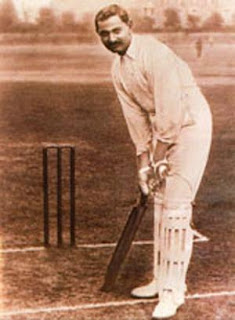
The Ranji Trophy is a domestic first-class cricket championship played in India between multiple teams representing regional and state cricket associations. The competition currently consists of 38 teams, with all 28 states in India and four of the eight union territories having at least one representation. The competition is named after the first Indian cricketer who played international cricket, Ranjitsinhji, who was also known as 'Ranji'.

 The competition was launched in following a meeting in July 1934,[1] with the first fixtures taking place in 1934–35. The trophy was donated by Ranji.[1] The first match of the competition was held on 4 November 1934 between Madras and Mysore at the Chepauk ground in Madras in the final. Mumbai(Bombay) have won the tournament the most number of times with 41 wins including 15 back-to-back wins from 1958–59 to 1972–73.

 State teams and cricket associations and clubs with first-class status are qualified to play in the Ranji Trophy. While most associations are regional, like the Karnataka State Cricket Association and Mumbai Cricket Association, two, Railways and Services, are pan-Indian.


The following 38 teams currently participate in the Ranji Trophy:
denotes newly added teams


The following teams have appeared in the Ranji Trophy, but no longer do so:


From its inceptions until the 2001 season (with the exception of 1948-49 season), the teams were grouped geographically into four or five zones – North, West, East, and South, with Central added in 1952–53. Initial matches were played within the zones on a knock-out basis until 1956–57, and thereafter on a league basis, to determine a winner; then, the five individual zone winners competed in a knock-out tournament, leading to a final which decided the winner of the Ranji Trophy. From the 1970–71 season, the knock-out stage was expanded to the top two teams from each zone, a total of ten qualifying teams. This was expanded again to the top three from each zone in 1992–93, a total of fifteen qualifying teams; between 1996–97 and 1999–2000, the fifteen qualifying teams competed in a secondary group stage, with three groups of five teams, and the top two from each group qualified for a six-team knock-out stage; in all other years until 2001–02, a full fifteen-team knock-out tournament was held.
The format was changed in the 2002–03 season with the zonal system abandoned and a two-division structure adopted – the Elite Group, containing fifteen teams, and the Plate Group, containing the rest. Each group had two sub-groups which played a round-robin; the top two from each Elite sub-group then contested a four-team knock-out tournament to determine the winner of the Ranji Trophy. The team which finished last in each Elite sub-group was relegated, and both Plate Group finalists were promoted for the following season. For the 2006–07 season, the divisions were re-labelled the Super League and Plate League respectively.
In the 2008–09 season, this format was adjusted to give both Super League and Plate League teams an opportunity to contest the Ranji Trophy. The top two from each Plate sub-group contested semi-finals; the winners of these two matches then joined the top three from each Super League sub-group in an eight-team knock-out tournament. The winner of this knock-out tournament then won the Ranji Trophy. Promotion and relegation between Super League and Plate League continued as before. In the 2010–11 season, Rajasthan won the Ranji Trophy after beginning the season in the Plate League.
From the 2012–13 season, this format was adjusted slightly. The Super League and Plate League names were abandoned, but the two-tier system remained. The top tier expanded from fifteen teams to eighteen teams, in two sub-groups of nine (known as Group A and Group B, and considered equal in status); and the second tier was reduced to nine teams in a single group (known as Group C). The top three teams from Groups A and B and the top two from Group C contest the knockout phase. The lowest placed team in each of Group A and Group B is relegated to Group C, and the top two from Group C are promoted to the top tier.
For the 2017-18 season, the two-tier system was abandoned to have 4 groups of seven teams each and two quarter-finalists from each group.
From the 2018-19 season, the teams contested in three-tiers. Five teams will qualify for the quarter-finals from the top tier (known as Elite Group A and Group B). Two teams will qualify from the second-tier (Elite Group C) and One team from the lower-tier (Plate Group) for the quarter-finals.
Round-robin matches are four days in length; knockout matches are played for five days. Throughout its history, if there is no outright result in a Ranji Trophy knock-out match, the team leading after the first innings is the winner.
Prior to the 2016–17 season matches were played at the home ground of one of the two teams taking part. For the 2016–17 competition the BCCI decided that all games would be staged at a neutral venue.[2]


Wednesday, May 8, 2019

Government of India: Declare Cyclone Fani a national disaster

Hey,

I just signed the petition "Government of India: Declare Cyclone Fani a national disaster" and wanted to see if you could help by adding your name.

Our goal is to reach 75,000 signatures and we need more support. You can read more and sign the petition here:

http://chng.it/FXmkzNc7fb

Thanks!
Sukant

Friday, December 26, 2014

Boxing Day Test: Honour Shared on day one


Steve Smith personified leadership as Australia reached 5-259 at stumps on day one of the Boxing Day Test against India.

Smith continued his career-best form to finish 72 not out, steadying the hosts on a topsy-turvy Friday watched by a crowd of 69,993 at the MCG.

The 25-year-old is on the cusp of a third century in the series and passed 1000 Test runs for the calender year.

Smith displayed grit, refusing to give India the upper hand as wickets tumbled around him.

The rise and rise of Smith over the past year has been underlined by fluent strokeplay, fancy footwork, fidgeting at the crease and a lot of runs.

But when half-centurions Chris Rogers and Shane Watson fell in consecutive overs during the second session as Australia slipped from 1-115 to 3-115, Smith reined it in.

Smith started the 50th over on two from 31 deliveries.

The right-hander, fresh from man-of-the-match honours in his first Test as captain, waited 12 overs before taking his first risk.

It paid off, Smith dancing down the wicket to offspinner Ravichandran Ashwin and lashing a boundary over the head of mid-off.

Shaun Marsh and debutant Joe Burns were dismissed in the final session after making starts, but Smith remained resolute alongside Brad Haddin (23 not out).

India had eight overs with the second new ball, but Smith and Haddin negotiated them in an unbeaten partnership worth 43 runs.

Smith remarked India were "whingeing and complaining among themselves" in his pre-match press conference.

It may have been the catalyst for a run-in with paceman Mohammed Shami, the pair swapping terse words after tea.

"A few stares and glares, even after this defensive shot. There's definitely something going on," Shane Warne said, while calling the game for the Nine Network.

David Warner's hopes of niggling the tourists ended in the second over when he was dismissed for a duck.

It set the tone for a stop-start day as both sides struggled to take control of the contest.

In India's case, their fielding let the hosts off the hook far too often.

Australia's first run only came in the fourth over, courtesy of a bye when wicketkeeper MS Dhoni fumbled a bouncer he should have taken cleanly.

Debutant KL Rahul and Shami, both recalled as India seek the victory they need to keep the four-Test series alive, also misfielded in the fourth over.

The errors cost so much more than the four runs added to the scoreboard, relieving the pressure on Rogers and Watson.

Watson scored 52, but was given a reprieve on 37 when Shikhar Dhawan failed to reel in a diving catch.

Dhawan had three bites at the cherry but couldn't complete the dismissal. Courtesy :The Sydney Morning Herald

Alastair Cook eyeing career change? ........Really?


Thursday, December 25, 2014

वक्सिंग डे पर वापसी की उम्मीद

  टिम इंडिया कल इस साल का आखिरी टेस्ट Australia के खिलाफ मेलबर्न में खेलेगी।वक्सिंग डे के नाम से मशहूर इस टेस्ट मैच में भारत 0-2 के scoreline के साथ जाएगी।पहले दो टेस्ट मैचों में हार के बाद सीरीज में भारत की वापसी का यह आखिरी मौका है।पहले टेस्ट में बिराट कोहली ने आक्रामक कप्तानी के साथ शुरुआत की थी।अनुभव की कमी के चलते भारत ने वह टेस्ट गंवाया।कप्तान धोनी के वापसी के वाबजूद भारत ने साधारण प्रदर्शन किया और दूसरा टेस्ट में भी हार का मुंह देखना पडा।दोनों मैचोंपर नजर डालें तो भारत की गेंदबाजी काफी साधारण थी।भारतीय गेंदबाजों  मे आक्रामकता की कमी थी।बल्लेबाज अच्छी शुरुआत को बडी पारियों में तबदील नहीं कर पाए।हालांकि कोहली ओर मुरली बिजय ने अछा प्रदर्शन किया मगर अन्य बल्लेबाजों ने निराश किया।भारतीय टीम में भुवनेश्वर कुमार की वापसी के बाद गेंदबाजी में सुधार आने की उम्मीद है।भारतीय गेंदबाज Australia को पिछले चार पारियों में केवल एक बार ही अलआउट कर पाई है।गेंदबाजों को 20 विकेट लेने की क्षमता दिखानी पडेगी।मध्यक्रम के बल्लेबाजों को अपने खेल में सुधार लाने की जरूरत है।

Blog stats


Tuesday, December 24, 2013

Back to Cricket-Return of Sarphera Blogger

After 2 and half years of EXILE Sarphera Blogger returned to cricket fraternity.Many things happened during the missed years-Fav 4's retirement,IPL controversy,Dhawan replaced Shewag naming a few..........Our new Assistant Blogger interviewed SB on his comeback to THE GENTLEMEN'S GAME FOLD.
Asst.Blogger:Welcome back.......
Sarphera Blogger:Thanks.....
Asst.Blogger:Why you exiled from cricket?
Sarphera Blogger:I wanted to do anything else except cricket blogging.So I took a break from here to try my luck in different areas.
AB:What you did in that period?
SB:I tried my luck in politics ,but I was forced to leave.
AB:What forced you to leave?
SB:I joined a mainstream party   but left that party after knowing that I couldn't be given a top post as I was not from the HALF-PANT wearing group.
AB:Oh,then?
SB:Then I started a career in football at Naughty Queens F.C. as a midfielder as David Beckham was my Icon.
AB:Naughty Queens F.C?Abroad?
SB:No,It is my village football club founded by my great grand father on 1889.
AB:How was your soccer career?
SB:I was overlooked and did not get any chance to play,so I left the game as a result of constant frustration.
AB:after that?
SB:then I thought that nothing can be achieved   by me except non-sense cricket blogging,so I came back to here.

Monday, July 18, 2011

'Battle of Taunton' and the 'Survival of the Fittest'

Hence the 3-day practice match between Indians and Somerset has been ended on a draw.The one-off practice match before first two tests showed that Indians have not adopted english conditions yet.This was not simply a practice match as this was the only chance to play against a county side before heading towards the Lord's.English test skipper Andrew Strauss who has retired from the shorter format of the game was the invited opener in the absence of Somerset skipper Markas Trescothick to regain his lost form.The prolific opener scored a watchful 78 ,Arul Suppaih played a magnificant knock toring Indian bowlers.Somerset piled 425/3 and declared its 1st innings.Indians were totally out played against the Somerset bowlers and bowled out for a mere 224 despite Raina's quickfire century.Except Raina,no one made an impression in this game. Before this game there was so much discussion about no.6 spot of Indian batting.Youraj Singh missed the tour of Carribean but he was one of few stars of the last world cup.In the absence of Yuvi,Raina played in the carribean utilising his capabilities.He played some positive knocks there .Now after Raina's another masterclass Dhoni will be clear of any doubt picking the no.6 batsman for the historic 2000th test and also 100th Indo-English test at Lord's.

Friday, July 15, 2011

India's England Tour 1974,"Summer of 42"


The Indian cricket team toured England in the 1974 English domestic
cricket season. After matches against many of county cricket and other
minor teams, in April and May, the Indian team played three Test
matches and two One-day Internationals against the England cricket
team. England won all five of the matches.
The season became known as the "Summer of 42",[1] referring to the
number of runs scored by India in its second innings in the Second
Test at Lord's (also a reference to the film Summer of '42 which won
an Oscar in 1972; a follow-up, Class of '44 had been released in
1973). This remains the lowest total for a completed innings in a Test
match since New Zealand were dismissed for 26 in 1955.[2] Blamed for
his team's poor showing, Indian captain, Ajit Wadekar, retired from
Test cricket after the tour.
Background
India could make a fair claim in the early 1970s to be the top
Test-playing nation. In 1970-71, the team had beaten the West Indies
in the Caribbean; in the English season that followed, 1971, the team
had won its first-ever victory on English soil and with it the first
series victory in Anglo-Indian Tests in England; and that victory was
repeated, with a 2-1 margin, when MCC toured India in 1972-73.
The basis of India's success was the quartet of high-class spin
bowlers – Chandrasekhar, Bedi, Prasanna and Venkataraghavan – backed
up by world-class batting from Sunil Gavaskar and Gundappa Vishwanath.
Ajit Wadekar was regarded as an astute captain, while Farokh Engineer
was an extrovert wicketkeeper-batsman.
[edit] Test matches
In the First Test, played from 6 June to 11 June at Old Trafford,
England won the toss and batted first, scoring 328-9 declared, with a
century for Keith Fletcher (123). Indian opening batsman Sunil
Gavaskar scored 101 in India's reply of 246 all out, assisted by 71
added down the batting order by Abid Ali. England reached 213-3 in
their second innings, declaring with John Edrich on 100 not out. India
were bowled out a second time for 182, and England won by 113 runs.[4]
In the Second Test, played from 21 June to 24 June at Lord's, England
again won the toss and batted first, scoring a monumental 629 all out,
with centuries for opening batsman Dennis Amiss (188), captain Mike
Denness (118), and Tony Greig (106); in addition, John Edrich was out
for 96. Indian spin bowler Bishen Bedi took six wickets, but conceded
226 runs in 64.2 overs. In reply, India scored 302 all out. Called to
follow on, India were dismissed a second time for only 42, and England
won by an innings and 285 runs inside 4 days. Chris Old took 5-21, to
add to his 4-67 in the first innings, and Geoff Arnold took 4-19.[5]
In the Third Test, played from 3 July to 8 July at Edgbaston, India
won the toss and batted first, scoring 165 all out. Wicket-keeper
Farokh Engineer top scored with 64 not out. English reached 459 for 2
declared in reply, with David Lloyd scoring 214 not out, Mike Denness
dismissed for exactly 100. India were bowled out for 216 in their
second innings, and England won by an innings and 78 runs.[6]
[edit] ODI matches
England also won both ODIs, played over 55 overs. The First ODI was
played on 13 July at Headingley. England won the toss and put India in
to bat. India scored 265 all out, bowled out with 7 balls to bowl.
England reached their victory target with 6 wickets down and 23 balls
to spare. [7]
In the Second ODI, played on 16 July at the Oval, India won the toss
and batted. They scored 171 all out in 47.3 overs. England reached
their victory target with 4 wickets down and over 6 overs to spare.
[8]

India's England Tour 2011 Schedule

Thursday, July 14, 2011

Indian Tour of England 1971

The Indian cricket team toured England in the 1971 season and played
19 first-class fixtures, winning 7, losing only one and drawing 11.
India played three Test matches and surprisingly won the series
against England 1–0 with two Tests drawn. This was India's first ever
series win in England. The First Test at Lord's and the Second Test at
Old Trafford were drawn. India pulled off a historic win in the Third
Test at The Oval by 4 wickets after being 71 behind on first innings.
They bowled England out for only 101 in the second innings with
Bhagwat Chandrasekhar claiming 6–38.
The Indian team was captained by Ajit Wadekar. Besides Wadekar and
Chandrasekhar, the team included other notable players in Dilip
Sardesai, Srinivasaraghavan Venkataraghavan, Gundappa Viswanath,
Bishan Singh Bedi and the young Sunil Gavaskar. Farokh Engineer, who
had a contract with Lancashire was made available for the Tests and a
few other matches.

Background
With South Africa out of Test cricket, England was arguably the best
cricket team in the world at this point of time. Earlier in the
summer, they had fortuitously managed to defeat Pakistan 1–0 but
coming into the series England had gone 24 Tests without defeat. They
were to extend it to a record 26 Test matches before losing the third
Test.
India had not won a Test abroad till 1968 and had had no success in
their previous six Test tours of England. However, under the new
captain Ajit Wadekar, India defeated West Indies in an away series in
early 1971. The victory in that series was built around the batting of
Sunil Gavaskar and Dilip Sardesai who scored 774 and 642 runs
respectively. Chandrasekhar had been a controversial omission from the
West Indies series. Chief Selector Vijay Merchant called his inclusion
for the tour of England "a ?calculated gamble"?.

Test Matches
First Test: India v England (22 – 27 July)

22–27 July
Scorecard England
304 (139.3 overs) v India
313 (165.3 overs) Match drawn
Lord's, London
Umpires: DJ Constant (Eng) and CS Elliott (Eng)
JA Snow 73 (132)
BS Bedi 4/70 [39.3] AL Wadekar 85 (182)
N Gifford 4/84 [45.3]
191 (98.5 overs) 145/8 (50 overs)
JH Edrich 62 (169)
S Venkataraghavan 4/52 [30.5] SM Gavaskar 53 (96)
N Gifford 4/43 [19]

You may be too young to remember, but in 1971, during a Test
match, I collided with England fast bowler John Snow and lost my bat.
Snow picked it up and handed it to me. But at the time, many papers
wrote that Snow had flung the bat at me. It all depends on your point
of view, or what you are trying to portray....[1] - Sunil Gavaskar
Picture
The England fast bowler John Snow rescued the England first innings
when he came in at 183/7 and made 73 to hoist the total up to 304.
This was Snow's highest Test and equal highest First Class score, but
he was disappointed not to realise his boyhood dream of a century at
Lords when he was caught off a Chandrasekhar googly.[2] India needed
183 to win in the fourth innings when Snow had the opener Ashok Mankad
caught by Knott for 8 and India were 21–2 when Sunil Gavaskar was
called for a quick single after hitting the ball to mid-wicket. Snow
went for the ball and knocked him over, "I could imagine the horror on
the faces of everybody watching the game from the committee room at
Lord's".[3] The were both uninjured, got up and continued with the
game after and Snow tossed Gavaskar's bat back to him. A similar
incident had happened in Georgetown in 1967–68 with Clive Lloyd, but
the 5'4" Indian received far more sympathy than the 6'4" West Indian
who nearly trampled Snow into the ground.[4] From afar the incident
had looked much worse and was replayed repeated on slow-motion
television with a media furore and press demanding disciplinary
action. The replay can be seen in the Indian episode of the BBC
documentary Empire of Cricket and it certainly appears that Snow
recklessly barged into the Gavaskar as he knocked him over. Many were
more angry about the throwing of the bat back than the knocking him
over in the first place. At lunch Snow returned to the dressing room
he apologised to the chairman of selectors Alec Bedser and promised to
do so to Gavaskar when an enraged Mike Griffith charged in and shouted
"That's the most disgusting thing I've ever seen on the field".
Illingworth took him out and Snow waited until he had calmed down
before apologising to Gavaskar on the field after lunch. When he later
saw the replay he said "Oh well, the scene's been far too quiet
without me anyway".[5] and realised he could not avoid being dropped
for the Second Test. The game was rained off with India needed 38
runs, but with England wanting only two wickets.

Second Test: India v England (5 – 10 August)

5–10 August
Scorecard England
386 (160.4 overs) v India
212 (93 overs) Match drawn
Old Trafford, Manchester
Umpires: AE Fagg (Eng) and TW Spencer (Eng)
R Illingworth 107 (298)
S Abid Ali 4/64 [32.4] SM Gavaskar 57 (129)
P Lever 5/70 [26]
245/3d (66 overs) 65/3 (27 overs)
BW Luckhurst 101 (173)
BS Bedi 1/21 [5] SM Gavaskar 24 (42)
JSE Price 2/30 [10]

Third Test: India v England (19–24 August)

19–24 August
Scorecard England
355 (108.4 overs) v India
284 (117.3 overs) India won by 4 wickets
Kennington Oval, London
Umpires: CS Elliott (Eng) and AEG Rhodes (Eng)
APE Knott 90 (116)
ED Solkar 3/28 [15] FM Engineer 59 (111)
R Illingworth 5/70 [34.3]
101 (45.1 overs) 174/6 (101 overs)
BW Luckhurst 33 (111)
BS Chandrasekhar 6/38 [18.1] AL Wadekar 45 (118)
DL Underwood 3/72 [38]

Snow returned for the Third Test and tore off Gavaskar's chain and
medallion with a bouncer that zipped under his chin and made him fall
over.[6] He bowled the Indian for 6 in the first innings and had him
lbw for a duck in the second, but this was not enough to prevent India
winning the Test and the series by four wickets. It was only the
second Test defeat Snow had seen since he had become and England
regular in 1966 and ended England's run of 27 Test without loss.

Tuesday, July 12, 2011

Chanderpaul Blocked INDIAN Victory

India won the three-Test series 1-0 following a 63-run victory inside four days in the first Test at Sabina Park in Jamaica, and a draw in the second Test at Kensington Oval in Barbados.
The visitors also wrapped up their second straight Test series victory over the West Indies in the Caribbean.
They also created a piece of history, becoming the first Indian side to win a Test and one-day international series in the Caribbean.
India suffered an early setback in their hunt for a victory target of 180.
India lost Abhinav Mukund lbw for a duck, playing back and across to the first delivery of the innings from Fidel Edwards in the brief passage of play before the break.
But Murali Vijay and Rahul Dravid steading the innings with a 72-run partnership for the second wicket. India, however, did not make any attempt to go for victory.
And once Vijay fell for 45, Dravid and VVS Laxman played a few overs before play was called off.
Earlier, Shivnarine Chanderpaul ended with the West Indies' top score of an undefeated 116, his 23rd Test hundred, making the occasion of his record 133rd appearance extra special.
He added a valuable 65 for the ninth wicket with Fidel Edwards, whose 30 was a career-best, and made him the object of great frustration for India.
But Suresh Raina had Edwards caught at long-off following a near three-hour long act of resistance, and in his following over, brought the curtain down on the West Indies' innings, when he had Devendra Bishoo caught at slip for one.
India had met defiance from West Indies before lunch, when Chanderpaul rallied the lower order to lead the home team to 294 for eight at the interval.
Chanderpaul became the second century-maker in the West Indies second innings, following Kirk Edwards' maiden hundred of 110 on debut the previous day.

Saturday, June 4, 2011

Orissa Premier League(OPL):Viewer's Diary part 1

When IPL was at its peak with Gayle's carribean tsunami crossing all
the boundaries,Orissa cricket association had launched its own version
of Premier League.I was excited as the cricketing juggernaut to
continue after IPL. Also it was believed that some deserving players
will get their turn to show their capabilities.The broadcasting was so
irritating that even Saas-Bahu daily soap haters would prefer to
choose daily soaps instead of OPL to enjoy the evenings.4 matches at
same time reminded me about 75's world cup. The broadcasting angles
were always changing and even some deliveries had been seen from
behind the wicket keeper.There was no straight view(It was short long
off view) and one can't judge LBW on TV.Thanks to the curators that
pitches has been transformed to DEAD soils more than that of greater
sahara.There was no spin and no pace assistance off the pitch.Some
players played according to their merit;Biplab,Natraj,Kameswar to name
a few.It has been disapointing that players have been playing as club
level.I didn't see many batsmans playing according to merit of the
ball.I have n't seen Bibhudatta Panda bowling before but he didn't
looked like a Ranji Trophy bowler.Fresh controversy has landed in OPL
as WS Rourkela had picked 2 Grade E players instead of 3 players for
its 2 matches.So OCA has asked WSR to replay those two matches.JSP
Sparks also convicted of playing less Grade E players.I think both the
franchisees should be disqualified from this season and those
responsible for this farce should be punished.

Friday, May 27, 2011

Orissa Premier League Schedule


Gambhir Quotes


"He is in very good nick. The most important thing when you are in good form is you need to continue and that's what he is doing. This is a sign of a mature player. Sometime what happens when the maturity is not there you end of losing form playing...
Apr 30, 2011 Times of India
"Getting 176 itself was a big effort. It was more than a par score and we were very happy with the total. Spinners and Brett Lee bowled well. We have positives to take away from this game barring the last over. Getting the total was a fantastic...
May 22, 2011 Times of India
"I always enjoy my captaincy, whether it is for India, whether it is for Delhi or this one. You end up taking responsibility. You end up learning a lot. You feel happy when you win," the southpaw said after his team's 20-run win over Deccan...
May 4, 2011 Times of India
Gautam Gambhir, the captain of KKR said: "It will be a different ball game in the play-offs. We have to do the things the hard way now".
May 25, 2011 NowPublic
Asked about their next match against Mumbai Indians, Gambhir said, "We want to go out there and look to win the next game as they we would have a very bright chance of moving into the second spot in the table, so that's what we will focus on."
May 19, 2011 NDTV.com

Sachin Tendulkar at World Cups


1992


1996


1999


2003


2007
 

2011